Study Trees and Learn About Tree Care
This is the perfect course for people wishing to gain a foundation knowledge of tree care and maintenance, whether for enhancing a garden maintenance service as an introduction to working in tree services.
Work in the Arboriculture Industry
Understand diagnosis and treatment of tree disorders. Pests, diseases, nutritional and water problems are covered. Learn about tree identification, biology, tree surgery practices, pruning and training both young and established trees, and safety measures to follow. Learn about:
- Tree biology
- Soils for trees
- Tree health problems
- How to prune trees correctly
- Equipment
- Workplace Health & Safety
This 100 hour module can be take as a short course or forms part of our Certificate in Arboriculture.
ACS Credentials
- Recognised by International Accreditation and Recognition Council
- Highly qualified and respected staff
- A range of memberships and affiliations in the UK, Australia and elsewhere.
- Affiliations and articulation arrangements with a range of other colleges in the UK and Australia.
Lesson Structure
There are 8 lessons in this course:
-
Introduction To Arboriculture
-
Trees in the Garden
-
Planting in the Wrong place
-
Plant Selection
-
How to plant a tree
-
Planting Bare Rooted trees
-
Planting Advanced trees
-
Helping a Tree to get established
-
How to Transplant a Tree
-
Using Tree Guards
-
Undertaking a Tree Inspection and Completing a Report
-
Tree Biology
-
Tree Growth
-
Photosynthesis
-
Respiration
-
Transpiration
-
Vernalisation
-
Process of autumn foliage colour change
-
Tree Physiology; roots, stems, leaves, reproductive parts
-
How a tree grows
-
Secondary Growth
-
Growth Rings
-
Heartwood and Sapwood
-
Compartmentalisation; how a tree rots
-
Water and Plant Growth
-
Rate of Photosynthesis
-
Rate of Respiration
-
Environmental Factors Affecting Transpiration
-
Terminology
-
Soils In Relation To Trees
-
Soil and Tree Growth
-
Fertilizing Trees
-
Compacted Soils
-
Tree Health and Drainage
-
Treating Soil over Winter
-
Changing Soil Levels around Trees
-
Practical Tests; measuring soil characteristics
-
Soils in relation to Trees
-
Nutrition
-
Managing ph
-
Fertilizers
-
Diagnosing Tree Problems
-
Tree Disorders and Health
-
Frost Protection
-
Minimizing Wind Damage
-
Affects of mulch and watering on frost
-
Mistletoe
-
Dealing with Problems
-
Diagnosing Tree Health Problems
-
Difficult to Diagnose Problems
-
Environmental Problems
-
Types of Disease: Blights, Canker, Galls, Leaf Spot, Mildew, Rots, Rust, Sooty Mould, Wilt etc
-
Types of Pests; Aphis, Beetles, Borers, Bugs, Caterpillars, Leafhoppers, Mites, Nematodes, Termites, Thrip, Wasp, etc.
-
Tree Surgery
-
Is Tree Surgery Needed
-
Types of Surgery; cavity treatment, rods, cables etc
-
Tree Surgery Safety; for workers, for public
-
Cavity Treatments
-
Bracing and Cabling
-
Propping
-
Treating Bark Wounds
-
Removing Large Branches
-
Climbing Techniques
-
Preparing to Climb, How to Climb, Anchoring Point
-
Knots
-
Pruning Of Trees
-
Introduction
-
Branch Removal Method
-
Crown Cleaning, Thinning
-
Crown Reduction
-
Crown Lifting
-
Pruning Objectives
-
Fruit Tree Pruning
-
Removing Trees
-
elling a Whole Tree
-
Felling in Sections
-
Terminology
-
Arboricultural Equipment
-
Introduction
-
Secateurs
-
Hand Saws
-
Power Tools, Safety with Electricity
-
Engine Troubleshooting; Dirty Spark Plugs
-
Tool Maintenance
-
Deciding what to Buy
-
Chain Saws
-
Hedge Trimmers
-
Climbing Equipment; ladder, harness, rope, belt, spurs, etc
-
Workplace Health and Safety.
-
Duty of Care
-
Workplace Safety
-
Lifting and Manual Handling
-
Protective Equipment; personal protection, gloves, eyewear, hearing protection, skin protection, knee protection, etc.
-
Handling Tools and Machinery Safely
-
Safe Chain Saw Handling
-
Tool Maintenance
-
Auditing Tools
Aims
-
Describe measures to provide healthy trees in different situations, including appropriate plant selection.
-
Explain tree biology, including morphology, anatomy and physiology, as it relates to arboriculture.
-
Develop procedures to manage soils for improved tree growth.
-
Develop procedures for managing health disorders with trees, including environmental, pest and disease problems.
-
Determine surgical techniques commonly used in arboriculture to repair damage to plants.
-
Explain tree surgery techniques commonly used in arboriculture to prune growth.
-
Determine appropriate equipment for arboricultural practice.
-
Determine appropriate workplace health and safety practices for an arboricultural workplace.
What You Will Do
-
Distinguish between plants in order to identify many different trees.
-
Develop a standard tree report form, customised for surveying the condition and use of trees in your locality.
-
Explain how to treat specified soil related problems that can affect trees.
-
Develop a twelve month program, for managing a health problem detected by you in an established tree.
-
Demonstrate bridge grafting across a bark wound.
-
Distinguish between different methods of pruning including:- Canopy reduction Cleaning out -Topiary -Espaliering.
-
Determine the minimum equipment required to commence business as a tree surgeon.
-
Compare different chainsaws, to determine appropriate applications for each.
-
Determine legislation which is relevant to a specific arborist in a workplace which you visit.

Every Tree Species is Different
Arboriculture is complex; if for no other reason, because every tree you deal with is going to be different. It will have different problems that need to be addressed; and your job will be to determine what those problems are, and make intelligent decisions about how to deal with those problems.
One very important part of doing this, is to be able to identify the species of plant you are dealing with, and understand the problems that are more likely to occur on that species, and the solutions that are more widely used to attend to those problems.
This course will develop a foundation for doing just that.
Consider just one common type of tree, and the things we know about that tree: then consider how many hundreds and thousands of other types of trees there are, and how each type is different:
For instance just consider one species of willow (Salix):
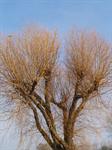
THE WILLOW
Genus: Salix
Family: Salicaceae
Common Name: Willow
Origin: Most parts of the world, except Australia; around 300 species.
Appearance: There is great variation in size from dwarf alpine creepers to large trees. Some have showy bark and weeping branches in winter. Others produce attractive male catkins which are of smooth appearance and silver grey in colour turning yellow with pollen. Female catkins are normally green and less conspicuous. Typically, willows are dioecious, that is the male and female catkins are borne on separate plants. Creeping species make good ground cover, whilst those with coloured bark contrast well with other trees noted for winter bark, such as silver birch and dogwoods.
Culture: Willows grow well in a sunny aspect in moist loamy soil. Some species will also grow in damp conditions. Almost all species prefer lowland sites. Weeping willows thrive in waterside locations. Larger species should be planted away from underground services due to their spreading root systems. Deadwood should be removed during winter. Those with coloured stems can be encouraged to produce more stems by pruning in late winter or early spring, or by hard pruning every other early spring.
Propagation: They may be propagated by hardwood cuttings taken during the winter months through to early spring. Potted cuttings can be planted out the following year.
Health: Generally hardy; willows are prone to caterpillars and beetle larvae. Gall mites can interfere with young growth causing stem distortion, whilst sawfly produce elongated galls on leaves. Aphids, especially the willow stem aphid, may infest plants causing sticky deposits. Scale insects may affect stems and new shoots. Willow scale can cause stems to look white if the infestation is severe. Diseases include anthracnose of willow which results in dark cankers on shoots and brown spotting of leaves. Bracket fungi may develop on stems and trunks. Dieback can occur as a result of various other fungi. Rust may present as orange or brown leaf spots. Willows may also be killed by honey fungus.
Uses: Shade tree, land rehabilitation, shelter belt, water garden plant, winter garden plant, specimen tree, colourful bark.
Problems: Most species of Salix are weeds in some places and useful plants in other places. Their root systems can be aggressive, damaging footpaths, drains and building foundations; and in the wrong place some species of willow trees can become very tall and wide
Pruning: Some species are routinely coppice pruned or pollarded, to control the size. This may be as severe as cutting back all growth to a stump only 10 to 30cm above the ground. This will encourage multiple stems and can create more of a shrub than tree like appearance. Pollarding may involve forming a trunk and a framework of short branches, to several metres above the ground and removing all growth from the framework annually.
These treatments can keep growth more controlled and healthy. Similarly, root pruning, or restriction of root growth with underground root barriers is sometimes used to manage willow growth.
Cultivars/Species:
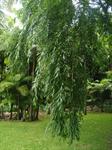
S. alba: (White Willow): Originates from Europe and Northern Asia where it is often found along watersides and in meadows. It is a large tree of up to 12m with a conical habit and slim branches which droop towards the ends. Leaves are lanceolate, grey-green, with smooth hairs, and appear en masse making them look silver from a distance. Catkins occur with the leaves, the male ones being 5cm long.
S. alba ‘Britzensis’ (syn. S. alba ‘Chermesina’; Scarlet Willow): Has orange-red branches which are striking in winter.
S. babylonica (Weeping Willow): Native to China; reaches a height of up to 7.5m with a spread of 9m. It has slender lanceolate leaves which have green upper sides and greyish blue undersides. The smooth brown branches are long and pendulous. Catkins are 2.5cm long and yellowy green appearing with the spring foliage.
S. x sepulcralis ‘Chrysocoma’ (syn S. x chrysocoma; S. alba ‘Vitellina Pendula’; S. a. ‘Tristis’): Often regarded as the most beautiful of hardy weeping trees these hybrids have slender pale to mid green lanceolate leaves which are produced on long pendulous yellow stems. It is a wide spreading tree with many branches and drooping branchlets. Both male and female flowers are usually produced in the catkins, though they may occur as separate male and female catkins.
BECOMING AN ARBORIST
 Imagine if there were no trees in our towns, cities and rural areas? Cold days would be colder, and hot days hotter. Pollutants wouldn't be filtered out of the air, wind storms would be stronger, floods would be more dramatic, and oxygen levels in the air would be slower. Without threes, we wouldn't have ant timber. Look around you and imagine a world without anything made from wood. Most people may take trees for granted; but they are exceedingly important to our every day living.
Someone has to make decisions about when and where to plant trees and what varieties to plant; then plant them, care for them and when necessary remove and replace them. This is the job of an arborist.
What Does an Arborist Do?
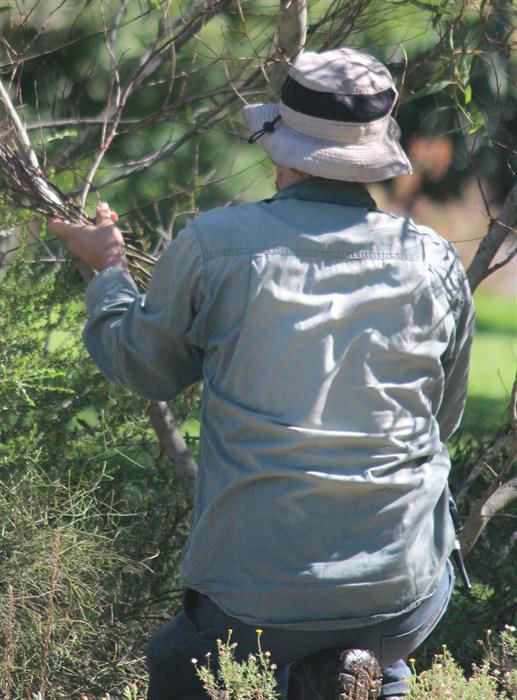
There is no typical days work for an arborist. Their work varies from season to season and place to place. It sometimes involves working inside an office, drawing plans and writing reports, or moving around streets, conducting surveys and recording information. It may just as easily involve physically demanding work, climbing trees, pruning with power equipment, or cutting up and mulching the remains of trees removed. An urban arborist may need to root prune large trees to control damage being caused to buildings, drains or pavement; or prune suckers from the base of large street trees.
Opportunities
This course is a very sound foundation in the fundamentals of arboriculture. It is sufficient to kick start a career or business working with trees; and to make you aware of the possibilities that lie in front of you to become a professional arborist.
- Some students already work in horticulture or abroriculture when they take this course. For them, it is a way of filling in gaps and giving perspective to knowledge and experience they have already started to develop.
- For others, this course can be an introduction to things they know very little about. IT will give them an awareness of the nature and scope of working with trees, and provide an underpinning knowledge upon which they can build their skills in tree work over the years that follows their studies.
- For some, this is a first step in your studies. As with anything; the more you learn, the more you are capable of. You can fast track further learning after this course with either more learning, or getting experience working with trees -or both.
ENROL or Use our FREE Course Advice Service to Connect with a Tutor