HYDROPONICS FOR THE HOME ENTHUSIAST
This course is a good starting point
for those who have little experience in horticulture or hydroponics;
whose main interest is in growing at home. Unlike our other courses,
this course is NOT intended for commercial growing in any way. You will
learn the theory behind hydroponic culture, as well as receive first
hand practical experience as you set up your own basic hydroponic
system.
Hydroponics can be used by gardeners to produce
vegetables and herbs in small spaces such as balconies and apartments as
well as in greenhouses for out-of-season production of certain crops.
Instead of soil, plants are grown in a sterile medium, such as rockwool,
perlite or sand. The medium provides a means of support only and does
not add to the plants’ nutrient requirements. All the nutrients taken up
by the plants in this system are added artificially through a nutrient
solution. Solutions vary according to the type of crop grown.
This unique home study course is 100 hrs and covers the essentials
of home hydroponics in 12 lessons. Gain skills and understanding in:
- Nutrient solutions
- Plant nutrition
- Hydroponic systems
- Greenhouses
- Nutrient films and soil media
- Plant culture and more
This course is a good starting point for those who have little experience in horticulture or hydroponics and whose main interest is in growing at home. Unlike our other courses, this course is NOT intended for commercial growing in any way.
You will learn the theory behind hydroponic culture, as well as receive first hand practical experience as you set up your own basic hydroponic system.
- Learn to grow plants in hydroponics
- Learn about the equipment and materials used
- Discover the nature and scope of this growing technique
-
Start any time, work at your own pace, grow anything from vegetables and berries, to cult flowers and herbs.
Course Duration: 100 hours of self paced study
Lesson Structure
There are 12 lessons in this course:
-
Basic Chemistry and Plant Nutrition - atoms, elements, nutrient deficiency symptoms
-
Nutrient Solutions - calculating formulae, hydroponic nutrition, preparing nutrient solutions
-
Types of Systems A - classification of hydroponic systems, ingredients of hydroponic systems, rockwool.
-
Types of Systems B - what makes up a system, 16 hydroponic ideas, NFT, solution dispensation.
-
plant Problems in Hydroponics - pests and diseases, nutritional and environmental problems, water and plant relationships, pH.
-
How a Plant Grows - growth, nutrient solutions, preparing a solution, mechanisms of nutrient uptake, photosynthesis.
-
Plant Culture - controlling environmental features, post harvest storage.
-
Hydroponic Vegetable Production - how to grow vegetables hydroponically.
-
Hydroponic Cut Flower Production - growing flowers in hydroponics, carnations.
-
Soil Media vs Nutrient Film - berries, indoor plants, types of media, NFT.
-
Greenhouse Operation & Management - solar energy applications in horticulture, greenhouse management.
-
Special Assignment - a report on how to improve your present hydroponic venture, or a report on planning a new hydroponic venture.
Aims
-
Describe the nature and scope of hydroponicS as a hobby
-
Explain plant nutrition for hydroponic situations.
-
Differentiate between a different fertilisers and hydroponic nutrient solutions
-
Recomment how nutrients might be appropriately used in a hydroponic garden.
-
Compare different growing media and systems, appropriate to a home hydroponic situation.
-
Design a hydroponic system suited to a particular home situation
-
Diagnose common ailments in a hydroponic system, make suggest treatments.
-
Describe general hydroponic crop in a home situation.
-
Differentiate between solid media and nutrient film hydroponic techniques, and the way in which plants may be treated differently in each.
-
Plan production of a sequence of crops in hydroponic production.
-
Determine methods for hydroponic cut flower production.
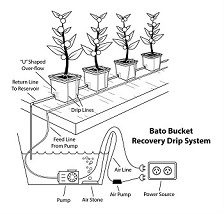 How Easy is it to Get Started?
There are lots of options of how you can grow hydroponically. It does not need to be complex at all to get started; but if you want it to be, it can become increasingly complex as you learn more about hydroponics.
Choosing the Category of System
The first choice is whether to use water culture, aggregate culture or rockwool. All three are viable and used successfully with a large variety of crops in many different parts of the world.
Your choice should take into consideration the following:
- What is the cost of each and how readily available are materials in your area?
- Is rockwool made/sold locally? If not, what freight charges are involved in having it delivered?
- Is there a local source of sand or gravel which can be used, or do you need to pay high cartage costs?
- What types of plants will you grow?
- Some plants require better aeration than others. Some systems provide better aeration than others, for example NFT systems.
Choosing Media to Grow in
There are three main groups of hydroponic media, based on their origins:
- Media derived from rock or stone
- Media derived from synthetics
- Organic media
General Characteristics
Media is the term given to the solid material(s) used to replace soil in aggregate culture and rockwool culture.
Hydroponic media must fulfill the following criteria:
- They must be chemically inert.
- They must be chemically stable.
- They must be clean.
- They must drain sufficiently freely not to create water logging problems.
- They must have adequate water-holding capacity.
- They must have adequate air-holding capacity.
Also:
- Buffer capacity should be good – this is the ability of the media to resist changes in pH.
- It is preferable that cation exchange capacity is at least moderate to good.
Getting a Nutrient Solution
Nutrient solutions for small hydroponic systems can often be adequately prepared by adding some additional components to a standard, general fertiliser (e.g. 5 parts gypsum and 1 part Epsom salts added to 6 parts of any powdered soluble plant food such as Thrive, Aquasol or Phostrogen). Sometimes it might be necessary to add a minute amount of micronutrient.
Larger scale hydroponic growers need a more accurate control of the components in a nutrient solution to achieve commercial success. A large number of different nutrient formulas have been developed for use in hydroponics. Some give better results than others, however there is no single formula that outshines all the others. The success of each formula depends on the conditions in which it is used and on which plants are being grown.
To make a nutrient solution you need to know the relative amounts of the different nutrients in a plant requires. The requirement is different for different types of plants. You need to know what proportion of each chemical ingredient you are using is actually the nutrient (e.g. one chemical might contain 20% nitrogen and another chemical 45% nitrogen; you need less than half as much of the second chemical to supply the same amount of nitrogen).
- You also need to know how soluble the chemicals you use are.
Some chemicals need more water or more mixing than others. Be aware of potential interactions between the chemicals you use.
- Some chemicals cannot be mixed with others, because they react together and become something new. This can be something you might not want in the solution, or something inert that can’t be used by the plants you are growing. In most cases, an amateur grower is better to purchase pre made nutrients, rather than try to make their own. It is nevertheless still important to understand how nutrient mixes are constructed, in order to make informed decisions about what to use and how to use it.
Where this Course Can Lead
Your ability to understand and practice hydroponics effectively will grow as you move through this course. You will interact with leading experts as your tutors, and learn more from the feedback they give you; and as this all develops, your awareness of what is possible will grow. The course will give you the opportunity to explore new ideas, try out new ways of growing plants, and connect with others who are involved with hydroponics.
Every graduate from this course will emerge with a different set of experiences, having explored the world of hydroponics in ways that are particular to their own interests and needs.
You may use what you learn to become more productive with the equipment you have already been using; or it may provide the knowledge and awareness you need to make better choices about setting up new systems.
New opportunities to utilise hydroponics will gradually become evident; and the stage will be set for you to continue growing your capacity to grow all sorts of things hydroponically.
WHY CHOOSE US?
-
Reputation: well-known and respected in horticulture.
-
Industry focus: courses designed to suit industry needs and expectations.
-
Different focus: develop problem solving skills that make you stand out from others.
-
Hands-on: develop practical as well as theoretical skills.
-
Lots of help: dedicated and knowledgeable tutors (faculty of internationally renowned horticulturists).
-
Efficient: prompt responses to your questions.
-
A long track record: established in 1979 with a solid history.
-
Up to date: courses under constant review.
-
Resources: huge wealth of constantly developing intellectual property.
-
Value: courses compare very favourably on a cost per study hour basis.
-
Student amenities: online student room, bookshop, ebooks, acs garden online resources.
ENROL or Use our FREE Course Advice Service to Connect with a Tutor