Study both Gardening & Landscaping in the same Certificate
This course develops skills in general horticulture, plant identification and use, design, costing and constructing gardens. It prepares you to develop a business or career in the landscape industry; but also teaches to all of the fundamentals needed to work in other areas of horticulture including nurseries, crop production or garden care.
- You have full support from our team of experts to mark your assignments and answer any questions as you move through the course
- Free student memberships are available with industry bodies such as Chartered Institute of Horticulture (UK), Australian Institute of Horticulture and others.
-The course involves both theory and practical work, and provides opportunities, encouragement and advice to get started in building your experience and networking to start or help with developing your pathway to a successful career in Landscaping and horticulture.
Meet one of the Graduates:
Jamie Speeding studied and completed this certificate more than 2 decades ago. While studying he formed his own business, Greenhort Design. Soon after Jamie became a member of The Australian Institute Of Horticulture (AIH) and was elected inaugural Chair of the Gold Coast branch, a position he held for three consecutive terms. His dedication to the industry saw him appointed on various industry advisory committees, form strong ties between the local nursery industry and help initiate the move to establish a botanic garden on the Gold Coast. He has also been a lecturer, magazine journalist and spent several years hosting a radio show on the local ABC.
He then became a commercial Landscape designer. He said ...
"For the past 18 months I have been mainly designing/drafting ACAD residential development landscape plans and childcare centers nationwide for Council submission. I now employ several full-time drafters and designers as the demand for our services has increased ten-fold."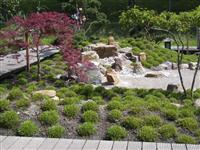
Jamie believes that a lot of his success in the horticulture industry can be attributed to ACS Principal John Mason and past tutor Paul Plant who both encouraged and supported his career.
Save
Lesson Structure
There are 30 lessons in this course:
-
Introduction to Plants
-
Nomenclature and taxonomy
-
The plant kingdom
-
Genus, species, hybrids
-
Parts of the Plant
-
How plants grow
-
Plant structure
-
Parts of the flower and leaf
-
Modification of stems and roots
-
Plant Culture - Planting
-
How to plant and protect newly planted specimens, annuals, biennials, perennials, deciduous, evergreen and herbaceous plants
-
Plant Culture - Pruning
-
Purpose for pruning
-
Rules for pruning
-
How to prune
-
Plant Culture - Irrigation and Machinery
-
Different irrigation systems
-
Components of an irrigation system
-
Designing an irrigation system
-
Maintenance in the garden and for tools
-
Soils & Media
-
Soil classifications
-
Soil testing
-
Potting mixes
-
The U.C. system
-
Ingredients of potting mixes
-
Soils & Nutrition
-
Fertilizers
-
Deficiencies and toxicities
-
N:P:K ratios
-
Salting
-
Fertilizer programming
-
Compost
-
Propagation - Seeds & Cuttings
-
How to propagate plants with the two easiest techniques: seeds and cuttings
-
Propagating mixes
-
Cold frame construction
-
After care for young plants
-
Propagation - Other Techniques
-
Other methods to increase plant numbers
-
Budding and grafting
-
Layering, division and tissue culture
-
Identification and Use of Plants
-
How are plants used in the landscape
-
How to choose and purchase plants
-
Selecting plants suitable for the climate and site
-
Identification and Use of Plants
-
Problems with plants
-
Choosing plants for problem sites
-
Identification and Use of Plants
-
Indoor and tropical plants, flowers, herbs, bulbs, ferns
-
Pests
-
Identifying and controlling pests
-
Chemical and natural methods for pest control
-
Chemical safety precautions
-
Diseases
-
Identifying and controlling diseases
-
Plant pathology
-
Fungi, viruses, non pathogenic problems
-
Interactions with the host and the environment
-
Weeds
-
Identifying weeds
-
Controlling weeds
-
Chemical terminology
-
History of Landscaping
-
Garden styles
-
Types of gardens
-
History of gardens
-
Principles of Design and Planning Information
-
Principles of design
-
Pre planning information
-
Using colour
-
Natural garden design
-
Eclectic gardens
-
Minimalist gardens
-
Plant application
-
Aesthetic criteria for design
-
Procedure for planting design
-
Entries
-
Birds in the garden
-
Drawing and Costs
-
Cost effective design
-
Garden style versus costs
-
Construction decisions
-
Planting decisions
-
Maintenance decisions
-
Garden investment
-
Determining costs
-
Drawing techniques
-
Computer aided design
-
Irrigation
-
Sprinkler systems
-
Micro irrigation
-
Planning an irrigation system
-
How to use a watering system
-
Automatic watering systems
-
Garden Designs
-
Park design
-
Home garden design
-
Cottage garden design
-
Trail design
-
Types of trails (fitness, sensory, cryptic, environmental)
-
Recreational landsacaping
-
Playground design
-
Barriers and walls
-
Gradients and dimensions
-
Earthmoving and Drainage
-
Levelling & basic surveying
-
Earthmoving equipment
-
Earth forming
-
Creating mounds
-
Raised beds
-
Importing or improving soil
-
Soil shaping
-
Soil degradation
-
Soil rehabilitation
-
Earthworks calculations
-
Materials
-
Using, choosing & preserving timber
-
Recycled timber
-
Rock work
-
Concrete
-
Coloured pebbles and gravel
-
Paths, Walls and Fences
-
Paths: guidelines, gradients, surfaces
-
Walls & sleeper walls
-
Types of fences
-
Building a wood fence
-
Garden structures
-
Play Structures
-
Skate facilities, motor vehicle parks
-
Pavers, stone and gravels
-
Contracts and specifications
-
Equipment
-
Manual tools and equipment
-
Power tools for landscaping
-
Water Features
-
Planning a water garden
-
Types of water gardens
-
Water quality, depth, area, safety etc.
-
Water effects
-
Finishing touches to a water garden
-
Fountains
-
Garden Art: Statues, Sundials and Figurines
-
Garden rooms: How to design a garden room, what to put in a garden room
-
Positioning garden art
-
Painting in the garden
-
Pots
-
Sculpture and statues
-
Outdoor furniture
-
Landscaping for Sports and Games
-
Fun and fitness trails
-
Outdoor multi purpose courts
-
Skateboarding
-
Types of playgrounds
-
Park design criteria
-
Landscape Management
-
Role of a manager
-
Management processes
-
Law and business
-
Communication skill
-
Marketing
-
Industry awareness
-
Landscape management
-
Industrial Relations: Unions and Workers
-
Work scheduling
-
Unions
-
Workplace health and safety
-
Maintenance of a New Landscape
-
Protecting young plants
-
Replanting
-
Pruning
-
Weed control
-
Maintaining turf
Aims
-
Explain the binomial system of plant classification and demonstrate identification of plant species by using botanical descriptions for leaf shapes and flowers.
-
Describe parts of the plant.
-
Determine the correct planting procedure of a range of different plants.
-
Explain the reasons for pruning and how to prune plants successfully.
-
Describe a range of machinery and irrigation equipment commonly used in horticulture.
-
Determine appropriate soil and media management for the purposes of preparing growth media for common horticultural activities.
-
Explain the relationship between soils, plants, and nutrient availability.
-
Describe plant propagation by seeds and cuttings.
-
Describe a range of common propagation techniques beyond seeds and cuttings.
-
Describe the optimal use of plants in landscaping applications.
-
Describe a range of problems that can occur when establishing and maintaining plants in landscaping situations.
-
Discuss the basic requirements for growing plants indoors.
-
Describe range of methods used for pest identification and control in a horticultural setting.
-
Describe a range of methods used for disease identification and control in a horticultural setting.
-
Discuss what constitutes a weed and how weeds can be controlled.
-
Be aware of different styles of gardening, principally through the study of the history of gardening.
-
Apply design principles in the landscape design of a garden.
-
Apply basic landscape drawing skills to produce a sketch plan.
-
Discuss the composition of landscape contracts and specifications.
-
Describe a range of irrigation systems and their appropriate landscape applications.
-
Describe some concepts of park and playground and home garden design.
-
Explain the importance of surveying and drainage in constructing a landscape and the principles of setting out a drainage system.
-
Describe various landscape materials and there use in the garden, as well as appropriate selection for landscape construction.
-
Describe the interrelationship between design and construction, application and availability of materials to ensure efficiency plus good design and construction principles.
-
Describe a range of surfacing material.
-
Discuss a range of tool and equipment needed for use in the landscape industry.
-
Describe a range of options for creating water features in gardens.
-
Describe the use of a range of different artistic features in gardens, including sculpture, pots and lighting.
-
Describe concepts of park and playground design; differentiating between good and bad design.
-
Discuss office procedures used in business, the laws associated with running a business and have knowledge of the types of equipment used.
-
Describe work plans/schedules and worker’s rights in your local jurisdiction.
-
Determine maintenance requirements of a park or garden.
What You Will Do
-
Review the historical evolution of gardens.
-
Obtain pre-planning information and use of that information to draw plans.
-
Identify different principles and styles of landscape designs.
-
Analyse garden designs.
-
Develop graphic skills, and a knowledge of drawing materials and techniques.
-
Prepare cost estimates for a landscape job.
-
Describe surfacing materials and their effects.
-
Explain the quality and cost of different landscape materials.
-
Develop a knowledge of plants, both native and exotic, suitable for local conditions.
-
Select plants for difficult sites and conditions.
-
Describe advantages and disadvantages of various pipes, sprinklers and pumping equipment.
-
Recommend irrigation systems for different landscape situations.
-
Design a simple irrigation system.
-
Design a bush garden and the value and relevance of using native plants.
-
Analyse and report on a cottage garden design.
-
Analyze and report on a playground design.
-
Prepare a playground design for a school or public park.
-
Draw layout plans for a range of gardens.
-
Conduct a detailed survey of a site, prepare a detailed plan based on that survey, estimate costs and develop contract documentation for that project.
-
Explain earthworks and soil preparation techniques used in landscaping.
-
Describe alternative techniques for establishing and growing plants.
-
Explain a range of landscape construction techniques including building fences, walls, rockeries, paths, water gardens, paving and drainage.
-
Compare different landscape materials with respect to their quality, cost, availability and application in garden construction.
-
Describe the correct procedures for the proper and safe removal of a limb from a tree, and for the felling of trees.
-
Develop a detailed maintenance program for a garden.
-
Demonstrate the ability to prepare for, and plant a new lawn.
-
Explain how to establish turf on a steep slope.
-
Write and advertisement for a landscaping business.
-
Explain basic management procedures.
-
Show a reasonable level of communication skill.
-
Explain health and safety requirements on a landscape site.
WHAT SETS ACS APART?
Service – We put the student first. Tutors and administration can be contacted 5 days a week, 50 weeks of the year, by phone or email.
We provide Better Learning – We’ve been delivering distance education for over 3 decades, and we understand how people learn by home study.
Our methods are unique, developed through experience with a focus squarely on helping you learn.
Up to Date – We are continually revising and updating courses. We listen to our students feed-back and we always improve the course if a change is identified that will help significantly improve your learning.
More Choice – Graduates need a set of skills that will set them apart and give them an advantage over competition in the world after study. We have a wide variety of study choices, and give you lots of options to choose different paths throughout a course. Doing this has meant our graduates very successful.
No Short Cuts –You can’t take short cuts in learning, and that is why our courses are often longer than you will find elsewhere. You could choose to study a short course, quickly sit an exam (while the information is fresh) and pass, but if you want to really understand something and retain it, that takes time.
More than just Learning Facts – We understand that success in the workplace or business requires you to not only learn things, but also build networks, understand the commercial world, be able to solve problems, communicate with people, and have an attitude that will function in your chosen industry.
WHY CHOOSE US?
- Reputation: well-known and respected in horticulture.
- Industry focus: courses designed to suit industry needs and expectations.
- Different focus: develop problem solving skills that make you stand out from others.
- Hands-on: develop practical as well as theoretical skills.
- Lots of help: dedicated and knowledgeable tutors (faculty of internationally renowned horticulturists).
- Efficient: prompt responses to your questions.
- A long track record: established in 1979 with a solid history.
- Up to date: courses under constant review.
- Resources: huge wealth of constantly developing intellectual property.
- Value: courses compare very favourably on a cost per study hour basis.
- Student amenities: online student room, bookshop, ebooks, acs garden online resources.
Enrol Now
ENROL or Use our FREE Course Advice Service to Connect with a Tutor